We have a new site and a new web address! For the latest and greatest...
Cincinnati Speech Therapy, PROMPT Therapy & Feeding Therapy
513 . 583 . 8333



|
||||||||||||||
 |
Cincinnati PROMPT Therapy, Feeding Therapy & Speech Therapy Services
The page you are looking for has been moved or deleted.
-
PROMPT Therapy
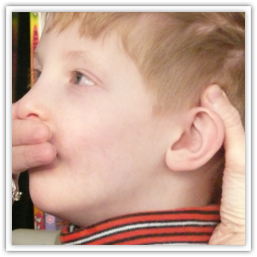
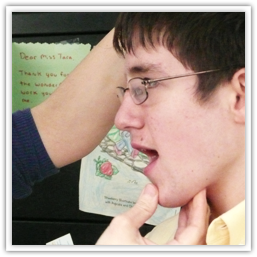
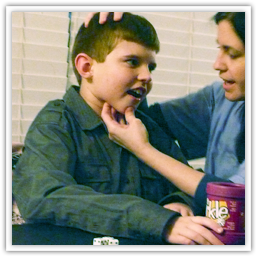
PROMPT was developed with children who have a severe motor impairment in mind. PROMPT is a dynamic system theoretical position utilizes tactual sensory information (in addition to auditory and visual) support and develop speech-motor function leading to improved communication function across all domains.
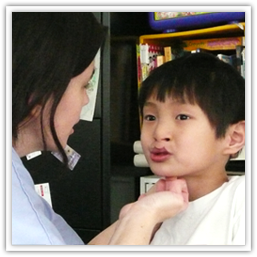
PROMPT is an acronym for Prompts for Restructuring Oral Motor Phonemic Targets. The PROMPT system is described as one which utilizes tactile cues of pressure, place, and timing to promote and enhance effective neuro-muscular innervation and coordination for the learning and integration of motor-speech behaviours

-
Feeding Therapy
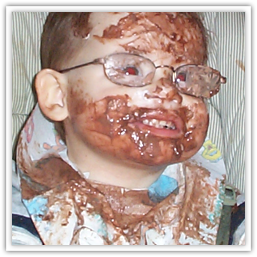
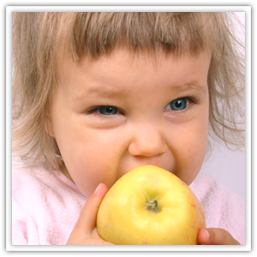
Behaviors are viewed as a symptom not as a cause of feeding issues therefore are not a primary focus. There are several stages of dysphagia as well as disordered feeding and here at S.M.I.L.E.S. We work on them all! We specialize in treating the whole child and viewing each child as an individual with a specific set of circumstances and challenges.
-
Speech Therapy
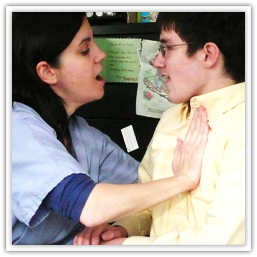
S.M.I.L.E.S. provides traditional to cutting edge approaches for all aspects of the speech therapy field. We strive to gain insight into all techniques then blend and mold each to fit the child's need not try to fit a child in a specific approach.
In order to maximize gains, S.M.I.L.E.S. takes great care in also working with parents on home carryover and parental involvement on a functional level, which is the ideal for faster and greater results.
-
Therapy Services
S.M.I.L.E.S. provides therapy to infants and children 0 to 21 years of age possessing severe feeding and/or swallowing difficulties-disorders, apraxia, dyspraxia, dysarthria, and speech and language disorders/delays. We provide evaluations, PROMPT therapy, feeding therapy, and other speech therapy services.
-
Consulting Services
S.M.I.L.E.S. provides varying levels of informative consulting services available to parents and professionals. Brief overviews to detailed information regarding feeding difficulties, aversions, disorders; swallowing, oral sensory motor functioning, apraxia, behavior, Down syndrome, cerebral palsy, etc., are available.
We welcome invitiations to speak at any parent group and organization within the Cincinnati Tri-State area. Speech seminars are also a passion of S.M.I.LE.S. We have a strong desire to educate others and to bring the best, most effective treatments to the children and families we serve.
PROMPT Therapy
PROMPT was developed with children who have a severe motor impairment in mind. PROMPT is a dynamic system theoretical position utilizes tactual sensory information (in addition to auditory and visual) support and develop speech-motor function leading to improved communication function across all domains.

Feeding Therapy
Behaviors are viewed as a symptom not as a cause of feeding issues therefore are not a primary focus. Once the underlying cause is discovered then, and only then, can we begin to successfully work towards reducing the behaviors/fears associated with feeding/swallowing.
Sign Up Today!

 Facebook
 YouTube
 Twitter
 RSS News Feed